How to Calculate Portfolio Risk and Return
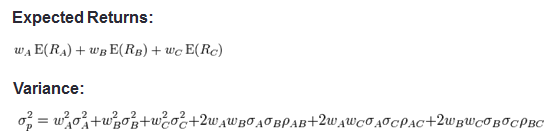
In this article, we will learn how to compute the risk and return of a portfolio of assets. Let’s start with a two asset portfolio.
Portfolio Return
Let’s say the returns from the two assets in the portfolio are R1 and R2. Also, assume the weights of the two assets in the portfolio are w1 and w2. Note that the sum of the weights of the assets in the portfolio should be 1. The returns from the portfolio will simply be the weighted average of the returns from the two assets, as shown below:
RP = w1R1 + w2R2
Let’s take a simple example. You invested $60,000 in asset 1 that produced 20% returns and $40,000 in asset 2 that produced 12% returns. The weights of the two assets are 60% and 40% respectively.
The portfolio returns will be:
RP = 0.60*20% + 0.40*12% = 16.8%
Portfolio Risk
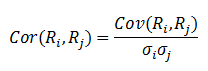
Let’s now look at how to calculate the risk of the portfolio. The risk of a portfolio is measured using the standard deviation of the portfolio. However, the standard deviation of the portfolio will not be simply the weighted average of the standard deviation of the two assets. We also need to consider the covariance/correlation between the assets. The covariance reflects the co-movement of the returns of the two assets. Unless the two assets are perfectly correlated, the covariance will have the impact of reduction in the overall risk of the portfolio.
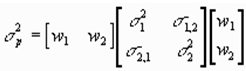
The portfolio standard deviation can be calculated as follows:
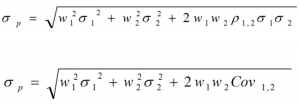
In the above example, let’s say the standard deviation of the two assets are 10 and 16, and the correlation between the two assets is -1. The standard deviation of the portfolio will be calculated as follows:
Test Your Knowledge
Check your understanding of this lesson with a short quiz.