How Insurance Companies Calculate Risk
People who are good at calculating probability and risk are few and far between. That is why understanding statistics is so vital to the market.
Like finance, the insurance industry is a collective of individuals who understand how risks change over time. The majority of Americans, on the other hand, find the sector overwhelming and annoying.
This article will cover the primary factors that insurance companies take into their calculation of risk.

Count the Possible Catastrophes
Insurance companies take account of all of the possible terrifying and unlucky events that could happen. When calculating premiums, insurance companies make sure that they are high enough to cover the costs of damages while reaping a healthy profit. To ensure success, the industry leverages catastrophe modelling as a sub-industry.
Catastrophe Modeling uses complex computer-generated models to predict the likelihood of disasters (natural and human-made) and how much these events would cost to repair. While also determining how much money the company must collect to cover themselves.
For example, a home insurance company is calculating hurricane risks to determine the premium for a beachfront home. They will plug data about past hurricane behaviour into a model. The simulation is run about 10,000 times to provide 10,000 possible outcomes; some of these outcomes are benign; others are disastrous.
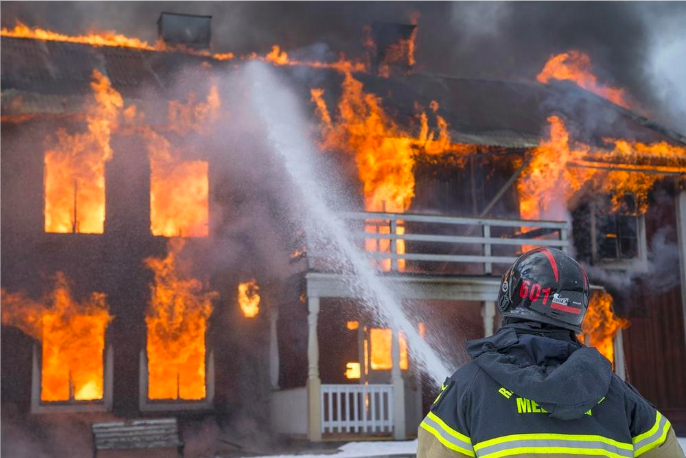
How Do Home Insurance Companies Calculate Risk?
The value of your home and its contents are not the only factors that influence how much you will have to pay each year.
Home Insurance premiums vary depending on region and insuring agency. Each home insurance company has its own criteria for determining rates. Companies look at the potential ‘risk.’
The likelihood that a homeowner will file a claim is determined mainly by the region. Weather-related claims are typically the driving force behind higher rates. As we touched on earlier, home insurance companies will run various risk models to identify the most expensive and most common culprit behind claims.